
Uncover the History and Fun of Trampolines in St Catharines
🤸
🎉
🦘
🎪
🚀
🪂
🌟
🎊
🤸 TRAMPOLINE FUN FACTS
6 Trampoline Facts That’ll Knock Your Jump Socks Off
From ancient traditions to outer space, trampolines have a wild and unexpected history. Today’s trampoline parks — like AeroSports — are just the latest chapter. These six facts will launch you through time, sport, science, and some seriously crazy places to bounce.
💡 Trampoline Fun at a Glance
Before we dive deep, here’s a quick look at six incredible facts about trampolines — from Inuit ingenuity and circus inventors to NASA training, Olympic glory, and an underground trampoline wonderland.
Inuit Walrus-Skin “Trampolines”
Long before modern trampolines, Inuit communities used stretched walrus skin to launch people into the air and catch them again — a traditional bounce with serious hang time.
George Nissen & His Kangaroo
The modern trampoline was invented in 1936 by trapeze artist George Nissen, who once bounced in sync with a kangaroo named Victoria to promote his new creation.
The Bed Doesn’t Bounce — the Springs Do
Trampoline fabric isn’t elastic at all — it’s made from strong woven material. The real bounce comes from the powerful springs around the frame.
NASA FAVOURITE
NASA Uses Trampolines
Astronauts train on trampolines to improve balance, control their center of gravity, and recover after space missions with low-impact movement.
Trampoline in the Olympics
Since 2000, trampolining has been an official Olympic event, where athletes soar up to 33 feet high while performing jaw-dropping flips and twists.
Underground Trampoline Caverns
In Wales, an old mineshaft was turned into a massive underground trampoline park, with nets and walkways stretched through huge caverns.
📚 Dive Deeper into Each Trampoline Fact
1. Inuit Trampoline
There was a traditional bouncing game practiced by the Inuit that looked a lot like trampolining. They would stretch a walrus skin in a circle, with one person in the center, then quickly tighten it to catapult the person up into the air — and catch them again on the way down. Not a modern trampoline, but definitely the same spirit of flying fun.
2. The Innovator and His Kangaroo
American trapeze artist George Nissen invented the trampoline in 1936, inspired by the safety nets that catch trapeze performers in the circus. Those nets didn’t just catch athletes — they bounced them back up for dramatic dismounts. Nissen built the first trampoline in his garage and began marketing it first for training, and eventually for fun. To promote it, he performed on a trampoline alongside a kangaroo named Victoria, timing his jumps in sync with the animal. Iconic, daring, and unforgettable.
3. Trampoline Fabric Isn’t Elastic!
It sounds impossible, but it’s true: the trampoline bed itself isn’t elastic. The black jumping surface is made from tightly woven nylon or similar material that barely stretches at all. The real power comes from the metal springs around the frame, which store and release energy every time you land. That combination of strong fabric and tuned springs is what gives you that satisfying, controlled bounce.
4. Trampolines in Space Training
NASA uses trampolines in multiple ways to prepare and rehabilitate astronauts. Beyond the basic fitness benefits, trampolining helps train astronauts to control their center of gravity — a key skill when you’re constantly drifting and turning in microgravity. After returning from space, trampolines are also used in low-impact routines that help rebuild bone density, improve balance, and strengthen joints without putting too much stress on the body.
5. Trampoline in the Olympics
Since the year 2000, trampolining has been an official Olympic event for both men and women. Competitors can reach dizzying heights of up to 33 feet in the air while performing flips, twists, and complex combinations. Athletes must perform a set routine of recognized skills plus an optional routine, and they’re judged on height, control, difficulty, and execution. Inventor George Nissen attended the very first Olympic trampoline event — a historic moment where his invention truly took center stage.
6. The Mineshaft Full of Trampolines
In Wales, an old mining town called Blaenau Ffestiniog converted its enormous underground caverns into a surreal trampoline park. Nets and trampolines are suspended at different heights connected by tunnels and walkways, creating a multi-level underground bounce experience. Up to 1,500 people a week explore this incredible space, jumping and sliding through a repurposed mine that feels more like a fantasy level in a video game.
AeroSports Has One of the Biggest Trampoline Parks in Ontario
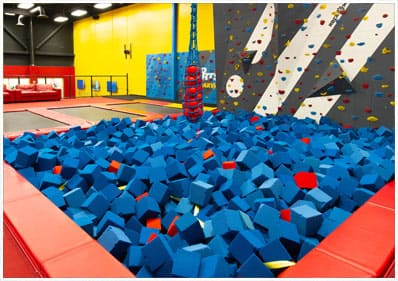
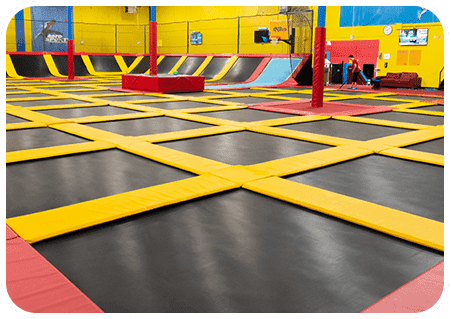
After hearing all these incredible trampoline stories, you don’t need to travel to space or a Welsh mineshaft to enjoy an unforgettable jump experience. AeroSports Trampoline Park offers massive jump areas, exciting attractions, and safe, supervised fun — right here in Ontario.
📅 Ready to Experience the Bounce for Yourself?
Whether you’re planning a birthday party, a group outing, or just a day of pure fun, AeroSports is the perfect place to put all this trampoline knowledge into action. Come jump, flip, and fly with us — safely, energetically, and with plenty of room to explore your inner astronaut.
📞
Contact AeroSports
Call your nearest AeroSports location
Our team will help you plan your visit or event.
📍
Find a Park Near You
Multiple locations across Ontario,
with massive trampoline parks and attractions.